
Is There A New World Order Coming

Is There A New World Order

Coming…..

The emergence of 2 BIG economies in Asia and an old challenger

from Europe, want their respective places under the sun.Is it about

time…

The game changing event , to an earlier prevailing world order,was

the first world war.How are events shaping out today ???

Is the concept of globalization getting threatened again ?? My two bit

on this please…

What comes to your mind when you hear the word “pizza”?

Domino’s Pizza, right?

What about mobile phones?

Apple or Samsung, isn’t it?

But what if these companies had never entered India? How different

would our world be?

And what if such foreign companies never get to enter India in the

future?

The Benefits of Globalisation

Globalisation has served India well. When India finally embraced it in

1991, our GDP improved massively,and our exports also grew by 20%

But the current scenario is threatening to overturn it.

US’ favourite weapon of war has been trade sanctions. It is the most

common move that is there in the playbook. And it’s not a new one.

During the first World War major countries were fighting each other and

the best way to win was to limit supplies. Countries which were spread

across the world had a distinct advantage.

The UK where most major businesses were located could simply stop

companies from supplying goods to enemy nations.

And something similar is happening right now. Major US and UK-based

companies are boycotting Russia over its invasion of Ukraine.

But this is not the only thing threatening globalisation.

World trade has been impacted majorly since the 2007 US housing crisis

Since the world economy was so interconnected, the whole world felt

financial shockwaves from the crisis.

The Covid-19 pandemic and the various trade wars (like that between

US and China) have just highlighted the problems of globalisation.

So, many countries like Russia and China have worked hard to

become self-reliant. And now India is also moving towards the

same path of “aatmanirbharta.”

Though this concept has never been at odds with globalisation, it could

help safeguard our national interests in case of future wars and

pandemics.

But is self-reliance the ultimate solution?

Well, no. If it was, countries would never have agreed to forget all their

differences and come together to trade.

Self-reliance comes with its own set of problems- the most alarming

being stagnation of development.

Globalisation leads to exchange of innovation and ideas. The world as

we know it today, wouldn’t be so without globalisation.

So, what is the solution?
Well, one solution could be that companies separate business and
politics at least when it comes to international matters. But this is
becoming increasingly more difficult for businesses as customers and
stakeholders only want to support companies that are involved in social
matters.
A second solution could be building better supply chains so that
countries don’t have to opt for self-reliance just out of the fear of another
pandemic.
However, these solutions are weak and depend a lot on countries’
mutual cooperation. Something that doesn’t seem to be on the cards
right now.
Methinks,the world will have to wait till the geopolitical event around
Ukraine-Russia pans out to its logical conclusion.The new world order
which emerges after that,will lay foundations to the next leg of
globalisation.There will have to be some more players in the game &
rightly so.
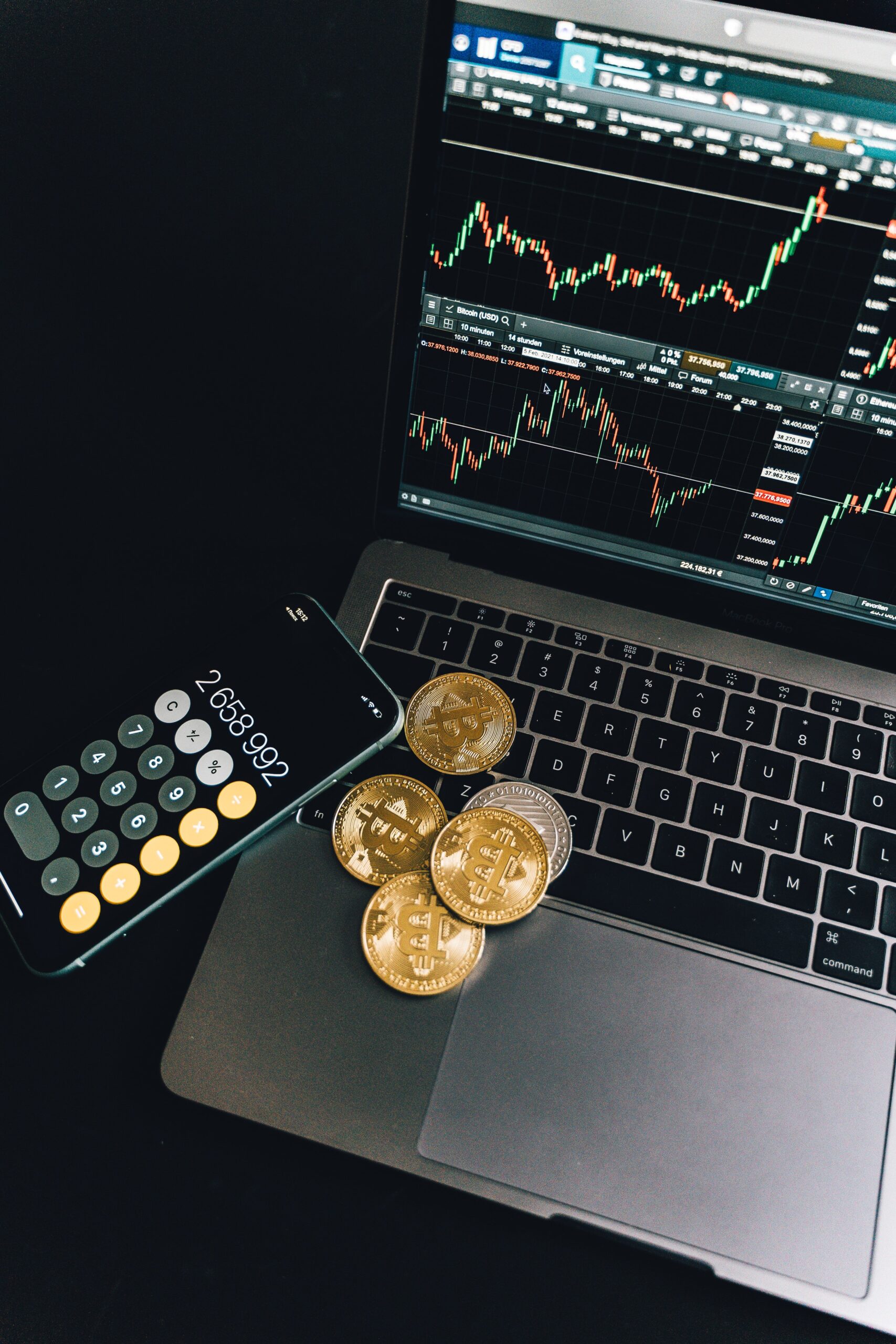

Digital Currency….The new kid on the block

crypto currency

Digital Currency….The new kid on the block

India is finally launching a CBDC (Central Bank Digital Currency)but how will that impact our current payments system?
The number one talking point of this year’s budget was the introduction of the Digital Rupee. Yes, after a long-drawn love-hate relationship with cryptocurrencies, India is finally accepting that they may have some merit.
But, it is still not ready to trust just any cryptocurrency. So, it is launching its very own central bank digital currency (CBDC) in 2023.
So how will this impact you and me ???
Let us do some soul searching…
Crypto Mania
An outdated payments system has increased the adoption of cryptocurrencies. While many are drawn to crypto because they are a faster, more efficient, and more private payment method, others are into it from an investment perspective.
But since cryptos are not yet widely accepted and still relatively new, they are very volatile. Plus, they can easily be used for money laundering as transactions are untraceable.
Also, many cryptos leave people vulnerable to scams, where you can lose your entire life savings. So, for governments across the world, the massive adoption of cryptocurrencies became a pain point. Not just that, they were worried that if everyone started using these private cryptocurrencies, the government-owned currencies would decline in popularity and value.
So, they came up with CBDCs. 87 countries are currently exploring CBDCs, and 9 have already launched some version of a digital currency. And now India is one of them.
The idea of a CBDC is a sweet rip-off of the cryptocurrency model – both rely strongly on encryption.
They will be built on a blockchain just like normal crypto and will work exactly like the present-day cash, the only difference being, they will be digital. Imagine apes turning into humans. That’s it. Digital currency is the natural evolution of money.
But unlike normal cryptos, they won’t be volatile. The price of one Bitcoin differs from day to day, but the price of one Digital Rupee will largely remain the same. This is because the Digital Rupee (and other CBDCs) derives value from our physical currency, which is pegged to the US dollar.
Advantages of a Digital Rupee
If you’re thinking that the Digital Rupee is just like digital payments and won’t make much of a difference, you’re mistaken. The Digital Rupee has the potential to completely transform our payments systems and solve their existing problems.
Firstly, it will make things much easier for the government. It won’t have to waste time, effort, and money in printing so many currency notes.
Secondly, it will eliminate the need for bank accounts. The current digital payments are linked to the money you have stored in your bank. But the Digital Rupee will be stored in an app on your phone.
So, even those without a bank account will be able to use digital payments easily. And this is a big deal for India where 19 crore adults don’t have a bank account. We are the world’s second-largest unbanked nation. This will also protect people from bank fraud and help them keep their money safe.
Plus, cross-border payments and remittances are still a major hassle as banks depend on intermediaries like VISA cards, settlement institutions, and clearinghouses to transfer and redirect funds amongst each other.
But CBDC transactions can take place easily and quickly through the blockchain without any intermediaries. This will make remittance transactions much more affordable for us.
Also, CBDCs could be a great tool to eliminate corruption. Every step and node of CBDC is traceable and unhackable, so with CBDC, we won’t need a demonetization. The government will legally be able to track and monitor every transaction.
With easy tracking of digital footprints, there would be a significant increase in tax collection with a swift leeway into new, innovative ways of providing financial services. The governments would know how to better their monetary and fiscal policies. In fact, they could tweak them on a day-to-day, hour-to-hour basis, bringing an unprecedented level of precision to monetary management.
All this sounds great, right? But well, every coin has two sides. So, let’s flip the coin and peep to the other side.
The Flip Side….
The first and the foremost concern that people have with the Digital Rupee is that it will infringe on their privacy. The government will be able to track and record every payment one makes. This is literally the opposite of what people want from a cryptocurrency.
So what if I don’t have anything to hide… how will this impact me?
Well, you see the government could build this CBDC on an authorized blockchain just like China. Through this permission blockchain, it could dictate where and how you spend your money. In fact, it could rule that you have to spend a certain part of your income to ensure enough liquidity in the economy at all times.
Plus, this model could be disruptive. Too disruptive. It could cause a lot of companies, especially fintech firms, to either go out of business or change their business models.

The biggest disruption will be in the banking system.

Just imagine, if a majority of the people stop depositing money in the banks, how will they extend loans? They would have to increase interest rates. Some banks could even have to completely shut down. This could end the banking industry as we know it.
And we’re not making these reasons up. The UK government conducted research on CBDCs and these are some of the disadvantages that the report threw up.
Plus bringing all the money onto a blockchain will be a mammoth task. And if the entire money in circulation is not on the block, issues such as corruption, income escaping taxes, terror funding will persist.
But then, this is still some distance away. Some very fundamental questions remain unanswered, like will CBDC give interest on funds deposited ??
India & China are amongst two of the nine countries in the world that have addressed this issue & have woven a tax structure around it. The world is watching very keenly and in time, would come together to formulate a common policy around it. The first few steps towards a working CBDC system, have been taken….

Russia On The Prowl  – Current Geopolitical Tensions

Chess match in progress

Russia On The Prowl  – Current Geopolitical Tensions


The quest for power has time and again led to wars and bloodbaths. Now there’s a new fight brewing in the West that could impact the entire world.

Russia v/s Ukraine.

Both the US and the UK believe that Russia is soon going to invade Ukraine as it has parked several troops in Belarus, near the Ukrainian border.

However, both countries and also the European Union have threatened to impose sanctions on Russia if it actually attacks Ukraine. And these sanctions could disrupt the entire global economy.

Why is Russia after Ukraine?

To understand the entire situation, you need to know about Russia and Ukraine’s history. They are kind of like the India and Pakistan of the West.

Both of them initially belonged to the same bloc, the Soviet Union. But they both eventually split when the bloc broke down in 1991.

And when a big chunk of land breaks up into several parts, there are always border issues. So, Russia to some extent feels it has a claim on Ukraine. More so, there are even Russian supporters in Ukraine calling for separation.

And in 2014, Russia tried to exercise this claim over Ukraine by annexing Crimea, which was an autonomous region overseen by Ukraine. This was a bad move on Russia’s part. The major powers of the world obviously did not approve of this invasion of Crimea, so they did what they do best. Levied sanctions on Russia.

Now, compared to the olden times when countries waged war on each other when they were mad, issuing sanctions seems like a very mild reaction. But it isn’t. These sanctions on trade, economy and business can bankrupt a country. And that’s exactly what happened. The sanctions caused a financial crisis in Russia and it ended up losing around $140 billion per year!

The Current Situation

Now that we have got the history behind us, let’s look at why Russia is preparing to invade Ukraine right now.

But then of course, Russia has denied that it wants to invade Ukraine.

Well, well. Actions speak louder than words. And Russia has 100,000 troops stationed at Ukraine’s border.

But why now?

You see, Ukraine wants to become a part of NATO, which is a multi-country military alliance amongst around 30 countries. The main objective of NATO is to protect member countries from foreign military threats.

Now, if Ukraine becomes a part of NATO this organization comes closer home to Russia. This is scary for the country as several of its rivals, like the US, are part of NATO. And Russia claims this is why it has stationed troops at Ukraine’s borders. But the US and the UK don’t believe this.

And this million dollar question. Why is the world concerned wrt what happens between Russia & Ukraine ??More so, why we, who are so far away from all this, have to be concerned ??

The US and UK have to care because they signed a treaty in 1994 to protect Ukraine if it gave up its nuclear weapons.

So, if Russia attacks Ukraine will it lead to another World War? Thankfully, No. But the US, the UK, and the EU will impose sanctions on Russia for this new attack. And this impacts all of us.

Russia is one of the biggest suppliers of natural gas to Europe and has created a pipeline called the Nord Stream 2 to supply this gas easily to major countries in the continent. Now, one of the sanctions that these countries could impose on Russia is not to approve this pipeline, which will be a major setback for it.

But at the same time, it will leave Europe without a precious supply of natural gas, which could lead to power cuts and increase the price of electricity.

So why would European countries approve a sanction that they know would harm themselves?

Because it would impact Russia more. And not just financially. You see, the pipeline would give Putin great leverage over Europe. Russia could threaten to cut the supply of natural gas at any time to ensure that the EU would comply with its demands. So, the EU is cutting to the chase and beating Russia at its own game.

What’s worrying is that this whole game is not restricted to just Europe. In this global economy, each country is connected with the other through delicate webs. Russia is the  second biggest producer of oil. If these sanctions halt the trading of oil or if Russia itself decides to cut down supply, oil prices could touch the sky. Already these tensions have taken oil prices to a 7 year high.

If the conflict escalates any more, then the growth of global GDP growth would come down to 0.9% from the forecasted 4.9%

Plus, for India, this conflict has other direct consequences. To fight the US, Russia may strike an alliance with China (because the enemy of your enemy is your friend). This scenario would be disastrous for us. Because Russia provides India with a lot of weapons. If China, which is fighting with us for border control, asks Russia to cut ties with us, we would be in trouble.

And even if China and Russia don’t join hands, US sanctions on Russia could make weapons trade more difficult for us. See the problem now? This uncertainty has already caused global stocks to plunge.

So, Russia invading Ukraine is in no one’s best interests.

And many believe that Russia knows this very well. It has played its cards very nicely so it can negotiate with the US and other European countries.

But will the other countries be open to negotiations? Or will Russia eventually invade Ukraine?

Only time will tell… 

What Could Move Markets In 2022?

Planning for path ahead

Que Sera Sera….

Let us make some intelligent guesses as to what could move markets in times to come, from a one-year perspective.

COVID –Omicron.

Vaccinations against Covid are effective & r getting better, but it is still sometimes when it completely goes away. The world will have to learn to live with it for a while.

Omicron is transmitting at a very fast pace but hasn’t proven fatal so far. What remains to be seen is what would happen if a large number of people get infected at one go & in one territory. Would it be fatal then?

Interest Rates At US

US Fed has indicated very clearly that in 2022 there will be 3 interest rate hikes to battle high inflation. World markets have started to come to terms with it & are factoring it accordingly.

India Growth Story – Economic Indicators.

IMF has stated that we will grow at a rate of 9.5% in 2021. This is the highest growth rate for any country this year. As per IMF, we will grow at the rate of 8.5% in 2022.

In the period of April-June 2020, we logged in a negative growth rate of -24.4%. Same quarter in 2021, we are + 20.1%, more so this is the first time in our independent history that we have grown so robustly.

Wholesale Price Inflation (WPI) is at 12 year high. It was at 14.23% in Nov ’21. This is primarily due to the rise in food prices especially of vegetables, minerals & petroleum products.

Per Capita Income is down by 8.24%.In 2020-21 this has come down by Rs 8951 & was at Rs 99,694. In 2019-20 we were at a record high of Rs 1,08,645.

The unemployment rate has improved from where we were in April 2021. In April the rate was 7.97%, in May at 11.84% and in Nov this has reduced substantially to 7%.

42 startups got the proverbial Unicorn status in 2021. In 2011 Inmobi was the first Unicorn ($ 1 billion valuations)startup. Today after 10 years we have 79 Unicorns & counting.

Stock Markets

Production disruptions, intermittent market closures, raw material price volatility & credit availability were the key reasons affecting market players in the Covid environment.

Mid & Small Cap stocks have rallied a lot in 2021 which has pushed their valuations up tremendously. Earnings growth & valuations, two counteracting forces will influence the performance of mid & small caps in 2022. Currently, after a solid run in the past 18 months, their valuations are high, both against the trend as well as large-caps. This high valuation will weigh down its relative performance.

Key large players in many sectors have grown faster than respective industry averages. And with stretched valuations in mid & small caps, large caps have a better chance of delivering in 2022.

With generous liquidity coming to an end, investors need to be careful with stocks whose valuations are very high relative to their past trends or that of peers.

However let us not forget that the Indian economy is at the start of a cyclical upswing, the two-year period up to Covid saw a sharp downswing.

Methinks that if the strength of the earnings recovery over the next 3 years is robust then we need not worry much about falling liquidity. A balanced view that considers medium-term growth prospects along with falling liquidity, would be more appropriate.

The year 2022 is going to be absolutely event-driven, both nationally & globally. Asset allocation will hold the key to investing. Spread yourselves across Large, mid & small caps & Dynamic Asset Allocation themes. Remain true to your risk profile & appetite. Identify your goals, plan meticulously for your desired returns & steadfastly, stay the course.

And yes, Indian stock markets are the place to be & stellar returns will come if one invests wisely & stays the course, keeping your life goals in mind !!!

Wishing all my investors a very happy, healthy & eventful New Year 2022!

TIME IN THE MARKET IS MORE IMPORTANT THAN TIMING THE MARKET

timing the markets

What is Market Timing?


Market timing is an investing strategy in which the investor tries to identify the best times to be in the market and when to get out. Proponents maintain that successfully forecasting the ups and downs of the market can result in higher returns than other strategies. Critics, however, note that changes in a market trend can appear suddenly and almost randomly, making the risk of misjudgment significant. Market timing is an investment strategy that involves going in and out of the market or switching asset classes based on predictions that attempt to measure how to market will move. The problem with this method is that it’s nearly impossible to accurately time the market even by successful Fund Managers across the world.


Market timing has its Disadvantages


One of the biggest costs of market timing is being out when the market unexpectedly surges upward, potentially missing some of the best-performing moments. For example, an investor, believing the market would go down, sells off equities and places the money in more conservative investments. While the money is out of stocks, the market instead enjoys a high-performing period. The investor has, therefore, incorrectly timed the market and missed those top months. Due to some quirk in human nature, we tend to be overconfident in our ability to predict the future. So we end up timing the market. Or at least trying to.

Mutual funds investors frequently try to time their systematic investments in response to the market’s ups and downs. When the market is falling, they stop their SIPs. When it is rising, they increase their SIP amounts. This invariably backfires.

The opposite of market timing is buying and holding as the market goes through its cycles.

Market timers often try to predict big wins in the investment markets, only to be disappointed by the reality of unexpected turns in performance. It’s true that market timing sometimes can appear to be beneficial. But for those who do not wish to subject their money to such a potentially risky strategy, time — not timing — could be the best alternative.


Time is Investor’s Best Friend


Clearly, time can be a better ally than timing. The best approach to your portfolio is to arm yourself with all the necessary information, and then take your questions to a financial advisor to help you with the final decision making. Above all, remember that both your long- and short-term investment decisions should be based on your financial needs and your ability to accept the risks that go along with each investment. Your financial advisor can help you determine which investments may be right for you.


Patience while Investing Pays BIG TIME!


Investors have been in tough situations in the past, the event that is still fresh in our memory being the 2008-09 Global Financial Crisis (GFC), where markets saw a flip flop ride initially which was finally followed by a swift recovery over medium to long term. Investors who tried to time the market during the crisis would have most likely repented while a patient investor who ignored the noise and remained invested would certainly be counting his fortunes today.


The below table shows the Systematic Investment Plan (SIP) of Rs 10,000 per month since 1st April 1998 in the NIFTY 50 Index and their market values during the 2008-09 GFC and after 5 and 10 years.


Date

Remarks

Total Months

Total Investment

Market Value(In Lakhs)

Sep 2007

1 Year before Global Financial Crisis

114

11.4

39.84

Sep 2008

Global Financial Crisis

126

12.6

32.06

Sep 2013

5 Years after Global Financial Crisis

186

18.6

53.98

Sep 2018

10 Years after Global Financial Crisis

246

24.6

110.74


As can be seen from the above table, the market value of SIP decreased from Rs 39.84 lakh to 32.06 lakh during the Global Financial Crisis. However, someone who would have continued their SIPs would have seen their wealth grow to Rs 53.98 lakh as of September 2013 (after 5 years of the GFC crisis) and Rs 110.74 lakh as of September 2018 (after 10 years of the GFC Crisis).


Since Last Year we were in a similar situation where the market value of SIP investment which was started 10 years (SIP of Rs 10,000 per month since 1st April 2010 in NIFTY 50 Index) back has seen a fall due to the outbreak of the pandemic and then we are witnessing Market upsurge and Long Term Visibility Looks Very Good in terms of Wealth Creation.


Date

Remarks

Total Months

Total Investment

Market Value(In Lakhs)

March 2019

1 Year Prior to COVID 19 Crisis

108

10.8

17.9

March 2020

COVID 19

120

12

14.07

March 2025

5 Year After COVID 19 Crisis

180

18

??

March 2030

10 Year After COVID 19 Crisis

240

24

??


Investors’ behavior becomes important during such times Like GFC, COVID 19, etc as emotions are at a greater play in situations when there is heightened volatility. Investors ‘Greed’ to chase returns and ‘Fear’ to stay away from falling markets usually keeps them at bay during tough times. The result is that the investor ends up sitting at the fence for a long time patiently investing to capture the right opportunity and multifold compounding returns.


TIME is a superpower. It works well even for the most Unlucky investor!


Let’s consider One investor invested only at the wrong time(invested just before any Major Market Fall). He didn’t take his money out after that and withstood all the future declines without panicking out.

This simple but difficult act of patience gave the portfolio a long enough time horizon to let compounding work its magic. While there is a natural tendency to shrug this off given the simplicity of the solution, here is some hard-hitting evidence.


Check out the returns of lumpsum investments in Nifty 50 TRI till date when invested right before the major falls of the past two decades.


Major Fall >20% Since 2000


Absolute Decline

Nifty 50 TRI Lumpsum CAGR(When

invested at Peak Just Before the Fall)


Debt


Inflation

2000 Dotcom Bubble

-50.00%

12.00%

8.00%

6.00%

2004 Indian Election Uncertainty-30%

-30.00%

14.00%

7.00%

6.00%

2006 Global Rate Hike Sell-Off

-30.00%

11.00%

8.00%

7.00%

2008 Global Financial Crisis

-59.00%

8.00%

8.00%

7.00%

2010 European Debt Crisis

-27.00%

10.00%

8.00%

7.00%

2015    Global     Market     Sell-Off(Yuan

Devaluation)


-22.00%


11.00%


8.00%


4.00%

2020 Covid Crash

-38.00%

19.00%

8.00%

4.00%


Summing it up


1-As seen above with the help of time even the most unlucky investor ended up with a reasonable outcome outperforming debt funds and inflation.

2-A simple SIP removes the need to time the markets and if given enough time provides a return that is almost as good as the hypothetical lucky market timer (who is difficult to exist in reality)!

3-If you have a long time horizon, a simple SIP in a few good equity funds for the next 10-15 years is all it takes to ensure a good investment outcome.


Do not let the inherent simplicity of the solution, undermine its ability to deliver the magic of compounding.